
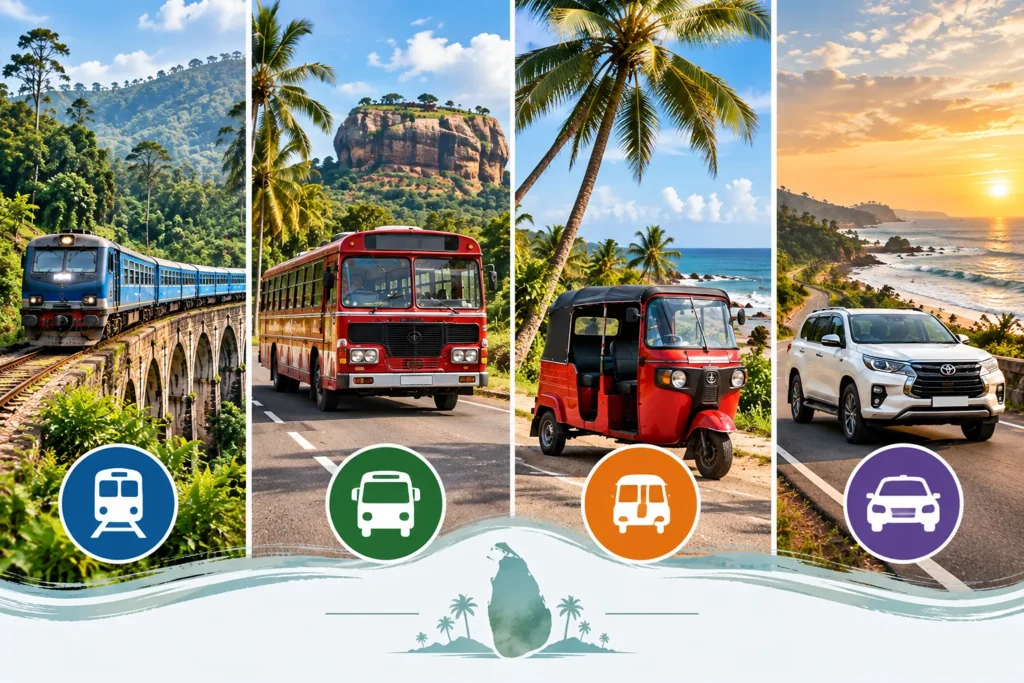
Sri Lanka may look small on a map, but getting from one destination to another can take longer than many first-time visitors expect. The good news is that you have plenty of ways to travel — from scenic trains and local buses to tuk-tuks, taxis and private drivers.
There is no single “best” way to get around Sri Lanka.
For most travelers, the smartest approach is to mix different types of transport depending on the route. A train might be part of the experience in the hill country, a tuk-tuk can be convenient for short local trips, buses can suit budget-conscious travelers, while a taxi or private driver may make more sense when you have luggage, limited time or several stops in one day.
This guide will help you decide which option makes sense for each part of your Sri Lanka trip.
Travel update: Transport schedules, fares, routes and service availability in Sri Lanka can change. Use this guide to choose the type of transport that suits your trip, but always check the latest information with the relevant official operator or booking service before you travel.
What Is the Best Way to Get Around Sri Lanka?
For most visitors, a combination works better than relying on one type of transport for the entire holiday.
| Transport | Best for | Keep in mind |
|---|---|---|
| Train | Scenic journeys and selected intercity routes | Routes, reservations and services can change |
| Bus | Budget travel and extensive local connections | Comfort and luggage space can vary |
| Tuk-tuk | Short trips and local exploring | Better suited to shorter journeys |
| Taxi / ride-hailing | Convenient point-to-point travel | Availability can vary by location |
| Private driver | Families, luggage, multi-stop days and tighter itineraries | Costs more than public transport |
| Self-drive | Travelers wanting more independence | Requires extra planning and current licence-rule checks |
The right choice depends on your route, budget, luggage, available time and travel style.
1. Traveling Around Sri Lanka by Train
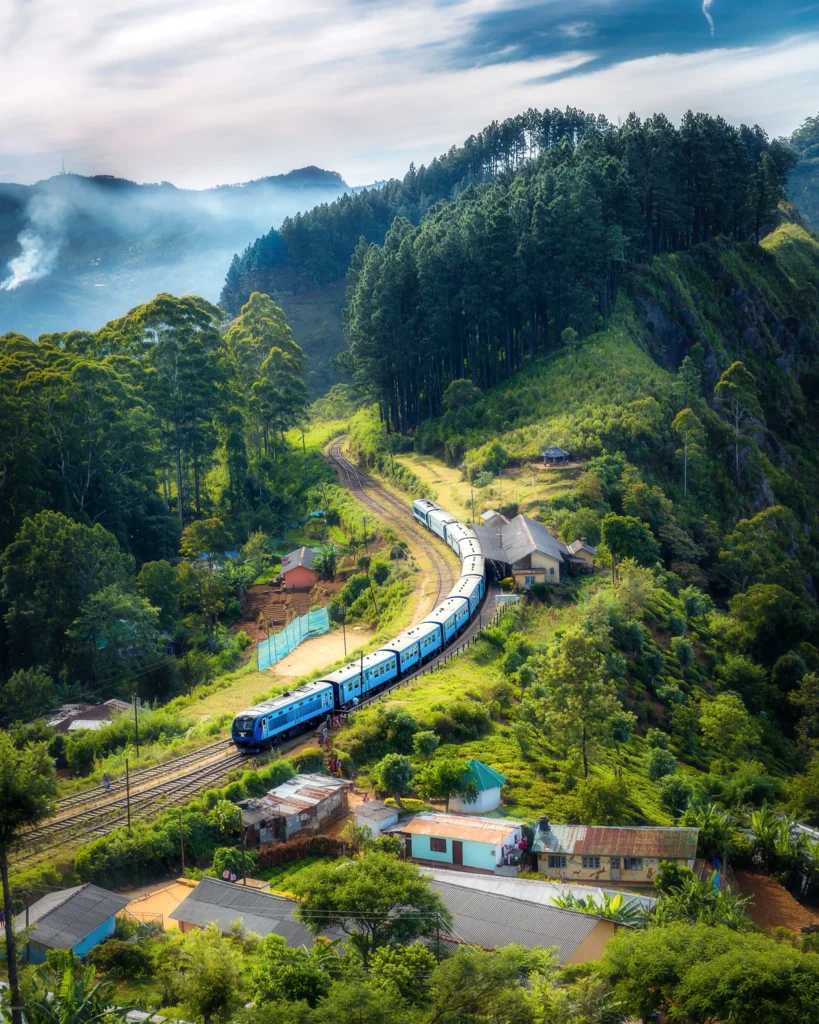
Sri Lanka’s railway journeys are one of the most memorable ways to see parts of the country.
Rail travel can be especially attractive in the hill country, where the journey itself can become part of the experience rather than simply a way of getting from A to B.
However, trains should not automatically be used for every transfer.
Sri Lanka’s rail network does not connect every major tourist destination directly, and disruptions, timetable changes and seat availability can affect your plans.
When Is the Train a Good Choice?
Consider train travel when:
- the railway conveniently connects your two destinations
- the journey itself is part of the experience
- you have enough flexibility in your itinerary
- you can travel comfortably with your luggage
- the relevant service is operating on your travel date
For destinations that require multiple connections or additional road transfers, another option may be more practical.
Reserved and Unreserved Train Travel
Some Sri Lankan train services offer reservable seating, while other journeys may involve unreserved travel.
Sri Lanka Railways currently operates an official online seat-reservation system for selected services and routes.
The official system includes reservable services on routes such as Colombo Fort–Kandy, Colombo Fort–Badulla and Kandy–Badulla, among others. Availability depends on the particular train and date.
Advance reservations currently open up to 30 days before the date of travel through the official system.
Because railway services and reservation arrangements can change, check the latest information directly with Sri Lanka Railways before planning your journey.
Official resource: Sri Lanka Railways Online Seat Reservation
A Note About Hill-Country Rail Travel in 2026
Parts of Sri Lanka’s railway network have experienced service disruptions and restoration work.
Sri Lanka Railways announced in June 2026 that train services between Badulla and Nanu Oya had resumed following restoration work on a cyclone-damaged section.
That does not mean travelers should assume that every route, connection or timetable shown in an older travel guide is currently operating exactly as described.
Before depending on a particular train journey — especially an important connection in a tightly planned itinerary — check the latest Sri Lanka Railways timetable and current service notices.
ThaproVibe Tip
Treat a scenic train ride as an experience you want to include, rather than building your entire itinerary around the assumption that every long-distance journey must be by train.
That gives you much more flexibility.
2. Getting Around Sri Lanka by Bus
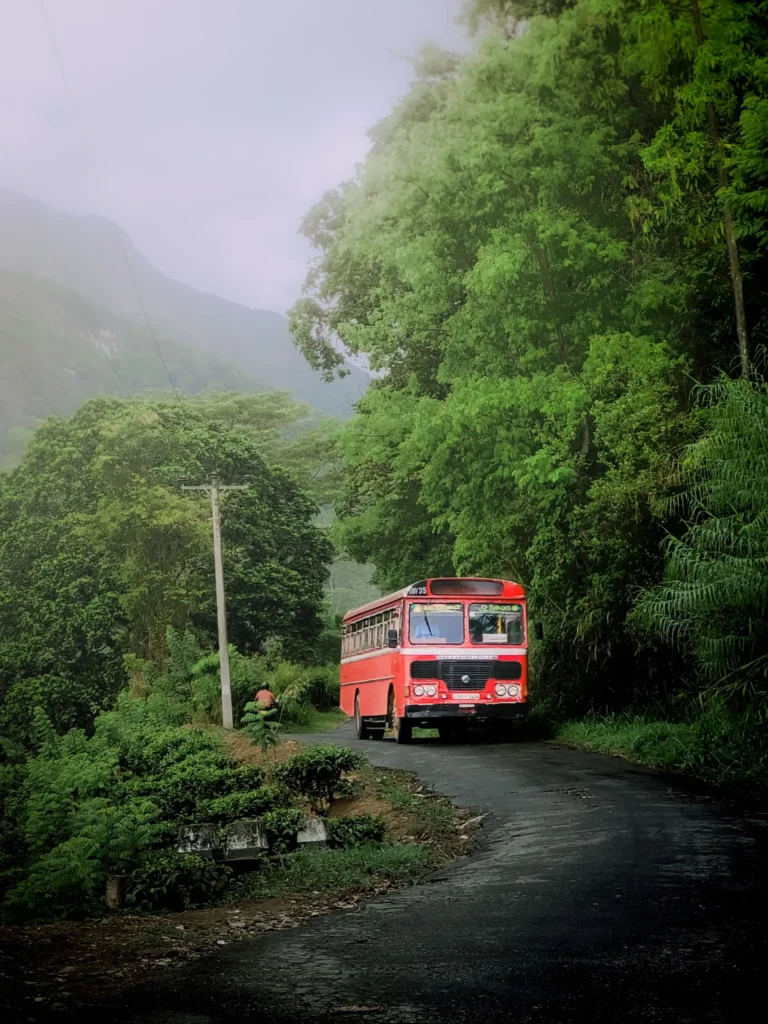
Sri Lanka has an extensive bus network connecting cities, towns and many smaller communities.
For travelers focused on keeping costs down, buses can be an important part of getting around the country.
They can also reach places where the railway does not.
However, the experience can be very different from taking a private transfer. Crowding, luggage space, comfort and journey times can vary depending on the route and service.
Who Is Bus Travel Best For?
Buses may suit you if:
- budget is a major priority
- you are comfortable using local public transport
- you are traveling relatively light
- your schedule has some flexibility
- you prefer a more local travel experience
If you are carrying large suitcases, traveling with young children or trying to complete several stops in a limited amount of time, the cheapest option may not always be the most practical one.
Should You Rely on Online Bus Timetables?
Be careful with old timetables found in travel blogs, forums and social posts.
Routes, departure times and operating conditions can change.
Instead of building a tight itinerary around a timetable you found months before your trip, verify important connections again closer to your travel date.
3. Using Tuk-Tuks in Sri Lanka
The three-wheeled tuk-tuk is one of the most familiar forms of local transport in Sri Lanka.
For visitors, tuk-tuks are particularly useful for short journeys, local sightseeing and getting between nearby attractions.
They can be a convenient way to reach a beach, restaurant, railway station, viewpoint or attraction without arranging a full-day vehicle.

When Does a Tuk-Tuk Make Sense?
Tuk-tuks are especially useful for:
- short journeys around towns
- local sightseeing
- getting between your accommodation and nearby attractions
- reaching a station or bus stop
- exploring destinations at a slower pace
For long transfers with large luggage, a car or another transport option may be more comfortable.
Street Tuk-Tuks and App-Based Rides
Depending on where you are, you may be able to arrange a tuk-tuk directly or through a ride-hailing app.
If you are arranging a ride directly, make sure you understand the fare arrangement before starting the journey.
For app-based rides, check availability at your actual location rather than assuming the same service coverage everywhere in the country.
4. Taxis and Ride-Hailing Apps
Taxis and ride-hailing services can fill the gap between inexpensive public transport and hiring a driver for a longer period.
They can be particularly useful for:
- airport transfers
- hotel-to-hotel transfers
- trips with luggage
- evening journeys
- short or medium-distance point-to-point travel
- situations where public transport would require several connections
Sri Lankan ride-hailing platform PickMe, for example, currently offers multiple vehicle categories including tuk-tuks, cars and vans through its app.
Features and actual vehicle availability can vary by location and time, so check the app when you need the ride rather than assuming a vehicle will always be available.
For airport arrival, it can also be useful to compare your accommodation’s transfer option with available taxi or ride-hailing choices before deciding.
5. Hiring a Private Driver in Sri Lanka
You do not automatically need a private driver to travel around Sri Lanka.
But there are situations where one can make an itinerary much easier.
A driver can be particularly practical if you:
- are traveling with children
- have several large bags
- have limited days in Sri Lanka
- want to visit several places in one day
- are traveling through areas where public transport would require multiple connections
- prefer door-to-door transport
- are traveling as a small group that can share the cost
The Cultural Triangle is a good example of an area where road transport can sometimes simplify a multi-stop itinerary.
On the other hand, if you are traveling slowly, staying several nights in each destination and enjoy using public transport, hiring the same driver for your entire holiday may be unnecessary.
A Better Approach for Many Travelers
Instead of choosing between:
“public transport for the whole trip”
and
“private driver for the whole trip,”
consider a mixed itinerary.
For example, you might use road transport for a complicated transfer, take a train for a scenic section of the journey, and use tuk-tuks for local exploring.
That flexibility is often more useful than committing to one transport type before understanding your route.
6. Self-Driving in Sri Lanka
Driving yourself gives you more independence, but it also requires more preparation.
Driving conditions, local traffic patterns, insurance requirements and the documents needed to legally drive can be different from what you are used to at home.
If you are considering renting and driving a car, motorcycle or other vehicle yourself, check the current Sri Lankan licence and permit requirements from an official source before booking.
Do not rely solely on an old travel article or rental-company summary for legal requirements.
For many first-time visitors, public transport combined with occasional taxis or private transfers can provide independence without the additional responsibility of driving.
7. Which Transport Should You Choose?
Instead of asking, “What is the best transport in Sri Lanka?” ask:
“What is the best transport for this particular part of my trip?”
Choose a Train When…
You want the rail journey itself to be part of your Sri Lanka experience and the current service fits your route.
Choose a Bus When…
Budget matters most, you are comfortable with local public transport and your itinerary allows flexibility.
Choose a Tuk-Tuk When…
You are making a short local journey or exploring attractions around one destination.
Choose a Taxi or Ride-Hailing Service When…
You want convenient point-to-point travel without arranging a vehicle for several days.
Consider a Private Driver When…
You have luggage, children, several stops, a tighter schedule or a route that would be complicated by public transport.
The best Sri Lanka itinerary can easily include all of the above at different points.
8. Best Transport for Popular Sri Lanka Routes
The following examples are planning guidance rather than fixed schedules. Always check current services and road conditions before your journey.
Bandaranaike International Airport → Negombo
Negombo is relatively close to Sri Lanka’s main international airport, so a direct taxi, ride-hailing option where available, or pre-arranged transfer is usually the simplest choice for most arriving travelers.
This is particularly convenient after a long international flight with luggage.
Bandaranaike International Airport → Sigiriya
For travelers going directly towards Sigiriya and the Cultural Triangle, road transport is often the most straightforward option.
A private transfer can be especially useful after an international arrival or when traveling with luggage.
Budget travelers can investigate public-transport combinations, but allow more flexibility for connections.
Sigiriya → Kandy
This is another journey where road transport can simplify the trip, especially if you want to stop at attractions along the way.
A direct or pre-arranged transfer may therefore be worth considering when your itinerary is time-sensitive.
Kandy / Hill Country → Ella
This is where many travelers immediately think of Sri Lanka’s famous hill-country railway.
A train can be a memorable part of the journey when the relevant services are operating and fit your itinerary.
However, check the current railway service status and timetable before building your day around a specific train.
If the rail connection does not work for your dates, road transport can provide an alternative.
Ella → Yala National Park Area
There is no reason to force a train journey into a route that is better suited to the road.
For travelers heading from Ella towards the Yala area, road transport is generally the more practical option.
If you are planning a safari, coordinate your arrival time with your accommodation and safari plans rather than looking at the transfer in isolation.
Yala Area → Mirissa / South Coast
Road transport is usually the most practical way to connect the Yala region with south-coast destinations.
Travelers with more time and a tighter budget can investigate public transport, while a private transfer offers a simpler door-to-door journey.
Galle → Colombo
This is a route where you may have several reasonable choices depending on your schedule and preferences.
Rail, bus and road transfers can all be relevant.
Rather than choosing purely on price, compare your current departure options, luggage and onward plans — especially if you are connecting to the airport.
9. Common Transport Mistakes First-Time Visitors Make
Mistake 1: Planning by Distance Alone
Two places may look close together on a map but still require more travel time than you expect.
Plan your Sri Lanka itinerary around realistic travel days, not only kilometres.
Mistake 2: Trying to Use One Transport Type for Everything
You do not need to choose between being a “train traveler” and a “private-driver traveler.”
Mixing transport usually creates a more flexible itinerary.
Mistake 3: Building a Trip Around an Old Timetable
A screenshot, blog post or forum comment from months or years ago may no longer reflect current operations.
Re-check important transport information before traveling.
Mistake 4: Ignoring Your Luggage
A transport option that sounds easy when researching from home can feel very different when you are carrying large suitcases.
Think about stairs, station transfers, walking distances and vehicle space.
Mistake 5: Packing Too Many Destinations Into the Trip
The biggest transport problem is sometimes not the transport at all — it is the itinerary.
Spending less time constantly changing hotels can make your Sri Lanka trip considerably more enjoyable.
Mistake 6: Assuming the Cheapest Option Is Always the Best Value
Saving money matters, but so does your holiday time.
A more expensive transfer can occasionally be worthwhile if it saves several connections or makes an otherwise difficult travel day manageable.
10. A Smarter Transport Mix for a 10-Day Sri Lanka Trip
A first-time 10-day trip does not need one vehicle from beginning to end.
A more flexible approach might include:
- a taxi or transfer after arriving at the airport
- road transport through destinations where it simplifies multi-stop sightseeing
- a scenic train journey where current services fit your route
- tuk-tuks for local exploring
- road transport for destinations such as Yala that do not fit naturally into a rail itinerary
- train, bus, taxi or a transfer for your final journey depending on where you finish the trip
The exact combination should depend on your itinerary rather than a fixed formula.
Planning your route? Read our 10-Day Sri Lanka Itinerary for a destination-by-destination trip plan.
11. Frequently Asked Questions
What is the best way to get around Sri Lanka?
For most travelers, the best approach is a mix of transport. Use trains where the journey adds to the experience, tuk-tuks for local trips, buses when budget is the priority, and taxis or private drivers when convenience, luggage or time matters more.
Is public transport good for tourists in Sri Lanka?
Public transport can be a useful and affordable way to travel, particularly for visitors with flexible schedules. Whether it suits you depends on your route, luggage, comfort preferences and available time.
Can I travel around Sri Lanka without a private driver?
Yes. A private driver is not essential for every traveler. Trains, buses, tuk-tuks and taxis can cover many journeys. A driver becomes more useful for complicated routes, families, luggage-heavy trips and tightly scheduled itineraries.
Are trains reliable in Sri Lanka?
Train travel can be useful and memorable, but schedules and services can be affected by operational changes or disruptions. Check the current Sri Lanka Railways timetable and service notices before relying on a particular journey.
How do I book a train ticket in Sri Lanka?
Sri Lanka Railways operates an official online seat-reservation platform for selected reservable services. The current system allows advance reservations up to 30 days before travel. Check the official platform for your specific route, date and availability.
Are tuk-tuks good for tourists?
Tuk-tuks can be very convenient for short local journeys and sightseeing. For long transfers, large luggage or bigger groups, another vehicle may be more comfortable.
Should I hire a driver for my whole Sri Lanka trip?
Not necessarily. Some travelers value the convenience, while others prefer mixing public transport with occasional transfers. Decide based on your itinerary rather than assuming a full-trip driver is required.
What is the best way to travel from Ella to Yala?
Road transport is generally the more practical option because the route does not fit naturally into Sri Lanka’s rail network. Choose between public-road transport and a direct transfer based on your budget, luggage and safari schedule.
Is Sri Lanka easy to travel around with luggage?
It is manageable, but luggage can influence which transport option is most comfortable. If you have large suitcases or change hotels frequently, taxis or transfers can simplify some journeys.
Plan Your Sri Lanka Trip With ThaproVibe
Getting around Sri Lanka becomes much easier once you stop searching for one perfect transport option.
Use the train for the experience. Take a tuk-tuk when it makes sense. Use buses when they suit your budget and route. Pay for a convenient road transfer when it genuinely makes your trip easier.
The best transport plan is the one that fits your actual itinerary.
Continue planning your trip with ThaproVibe:
- Sri Lanka Travel Guide 2026
- 10 Days in Sri Lanka
- Explore Ella
- Explore Kandy
- Explore Sigiriya
- Yala National Park & Safari Guide
Useful Official Resources
Before traveling, check current information through official or direct service sources where possible:
- Sri Lanka Railways — current service notices and railway information
- Sri Lanka Railways — official online seat reservations
- Sri Lanka Railways — train timetable
- Relevant transport or service operator for your specific journey
Last reviewed by ThaproVibe: September 2026
Transport information can change. Always verify important schedules, reservations, service availability and legal requirements close to your travel date.


2 Responses
Really helpful guide for anyone planning a Sri Lanka trip 🇱🇰 Transport can be a little confusing at first, especially when choosing between trains, buses, tuk-tuks and private drivers. This explains the options really clearly.
Thank you so much! 😊 We’re glad you found the guide helpful. Getting around Sri Lanka can feel a little confusing at first, so we wanted to make the different transport options easier to understand for travelers. 🇱🇰
Hope you have an amazing journey around Sri Lanka! 💚
— ThaproVibe Team